


How to Plan Your First Tattoo Sleeve in Omaha: 5 Steps to Get It Right
- Dee Bartholow
- Jan 25
- 5 min read

So you've decided you want a tattoo sleeve. That's a big commitment, and honestly, one of the most exciting tattoo journeys you can take. A sleeve isn't just a tattoo: it's a wearable piece of art that tells your story, showcases your personality, and becomes part of who you are.
But here's the thing: a sleeve isn't something you want to rush. We've seen clients come in with poorly planned sleeves from other shops, and the frustration is real. Mismatched styles, awkward placements, and designs that don't flow together can turn your dream sleeve into a patchwork of regret.
The good news? With the right planning, your sleeve can be everything you've imagined and more. Whether you're in Midtown, Dundee, or anywhere else in the Omaha area, these five steps will help you plan a sleeve you'll be proud to show off for the rest of your life.
Step 1: Decide What Type of Sleeve You Actually Want
Before you start collecting reference images on Pinterest, you need to figure out how much coverage you're going for. Not all sleeves are created equal, and understanding your options will help you communicate clearly with your artist.
Here are your main options:
Quarter sleeve: Covers the area from your shoulder to about mid-bicep. This is a great starting point if you're not ready to commit to a full arm.
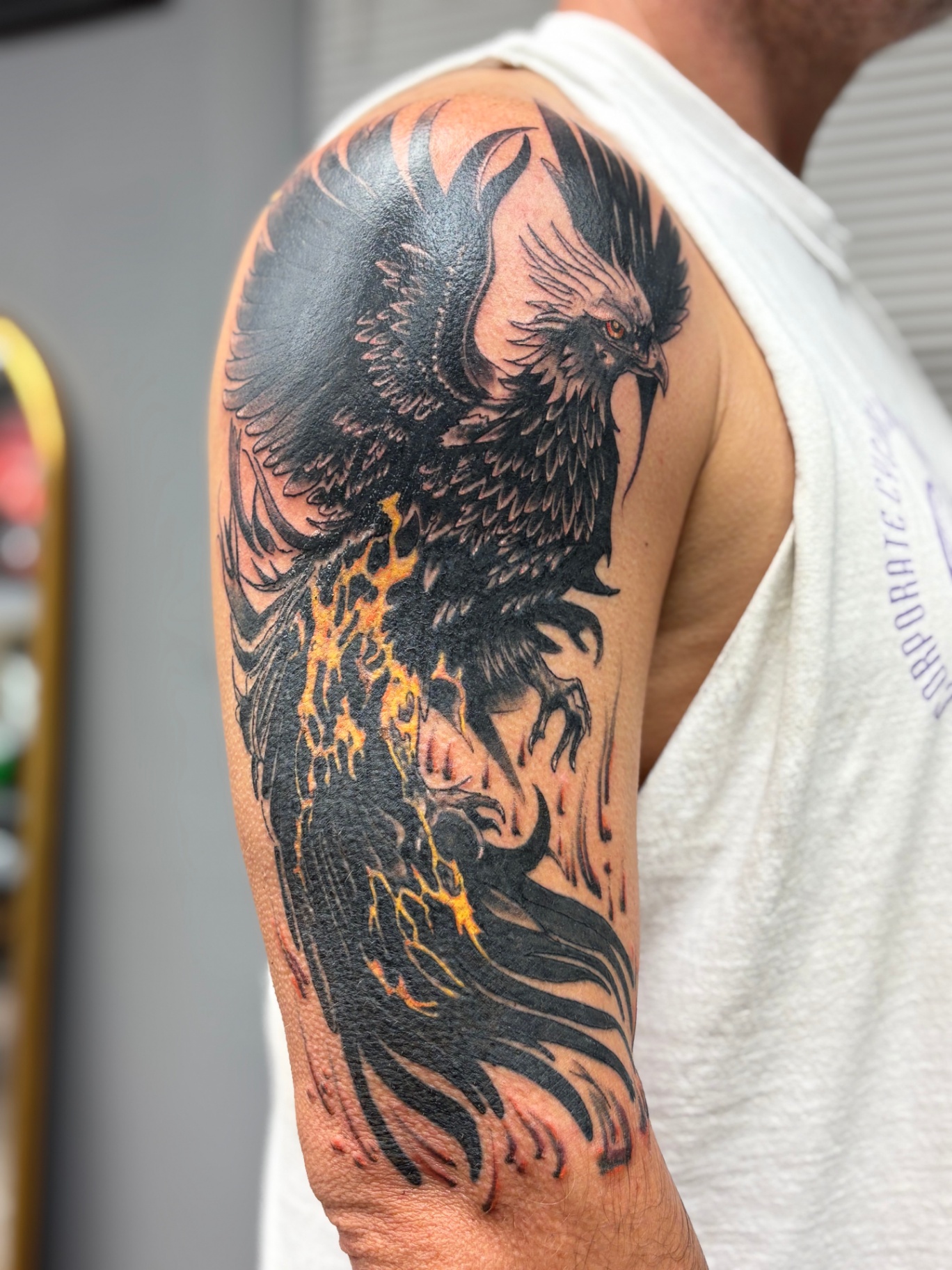
Half sleeve: Extends from your shoulder down to your elbow. Popular, visible, and easier to cover up for work if needed.
Three-quarter sleeve: Goes from your shoulder to mid-forearm. Gives you more room for detailed work while still being somewhat concealable.
Full sleeve: The whole arm, from shoulder to wrist. This is the ultimate commitment and requires the most planning.
Your choice here affects everything: your budget, your timeline, and how your design will flow. Take some time to think about your lifestyle, your job, and how visible you want your ink to be before moving forward.
Step 2: Establish a Theme or Style That Speaks to You
Here's where a lot of people make their first mistake: they start collecting random images without thinking about how everything will work together. A cohesive sleeve needs a unifying theme or style that ties all the elements together.
Think about what resonates with you on a deeper level. Here are some popular directions to consider:
Nature-based themes: Florals, animals, landscapes, ocean scenes
Cultural or heritage imagery: Traditional Japanese, Chicano, Celtic, tribal
Personal symbolism: Family tributes, memorial pieces, meaningful quotes
Fantasy and mythology: Dragons, phoenixes, gods and goddesses
Realism portraits: Loved ones, musicians, movie characters
Geometric or abstract: Patterns, mandalas, sacred geometry
The key is committing to something that tells your story. Your sleeve should feel like an extension of who you are, not just a collection of cool images you found online.
Don't rush this step. Seriously. We've had clients who spent months: even a year: refining their vision before their first session. That patience pays off in a sleeve that feels intentional and complete.
Step 3: Gather References and Visualize Your Design
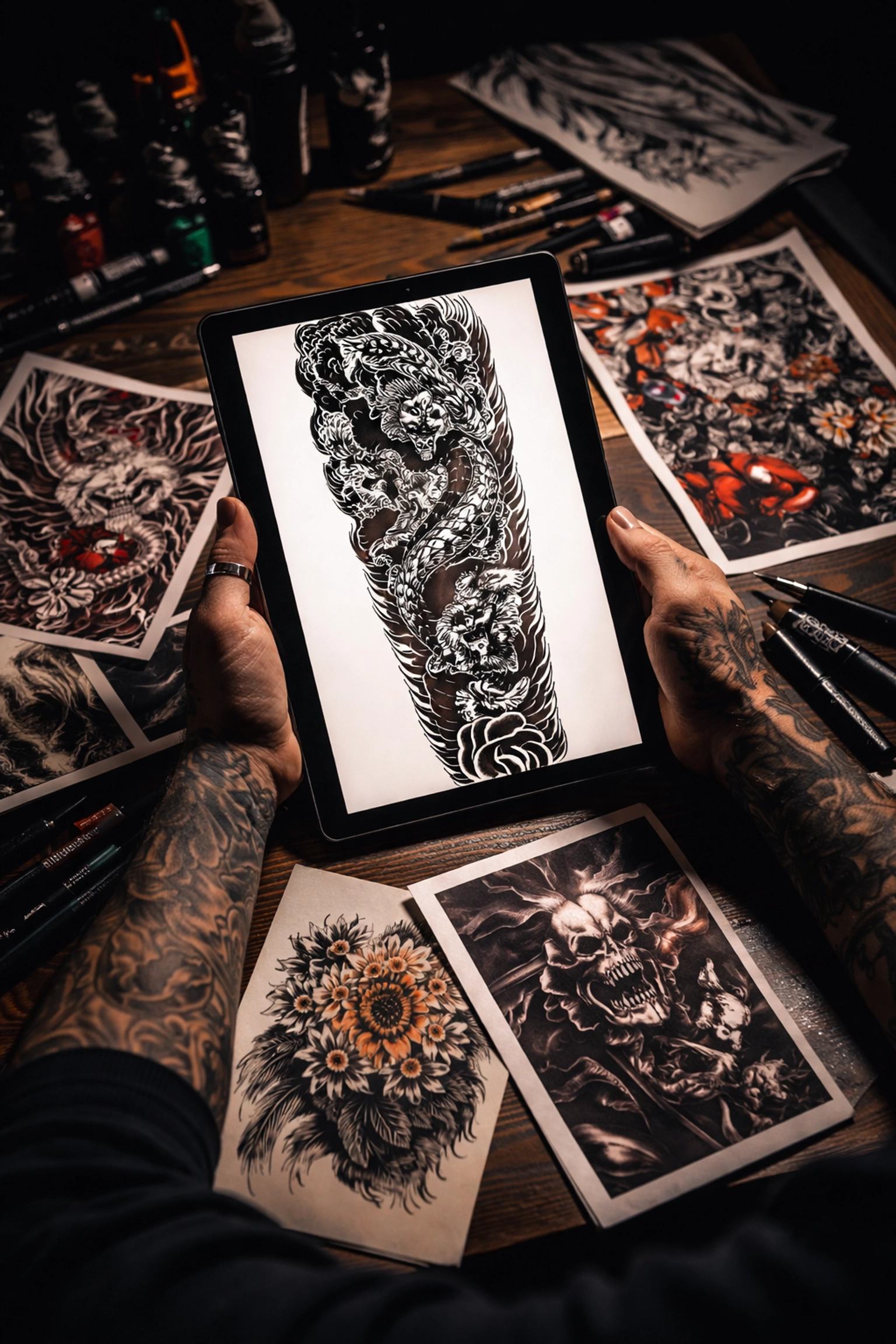
Once you have a theme in mind, it's time to start collecting visual references. This isn't about finding the exact tattoo you want copied: it's about giving your artist a window into your vision.
Here's how to build a solid reference folder:
Save images that capture the vibe you're going for, even if they're not tattoos. Paintings, photographs, album covers, and movie stills can all inspire great tattoo work.
Note specific elements you love: Maybe it's the way light hits a certain portrait, or the color palette of a particular piece.
Consider placement: Think about which designs would look best on your bicep, forearm, inner arm, or elbow. Your outer forearm and bicep are natural focal points that draw the most attention.
Think about flow: How will the pieces connect? Will there be background filler, or will each element stand alone?
Your arm isn't a flat canvas: it's a three-dimensional surface with curves, muscles, and movement. A skilled artist will help you understand how your design will look when your arm is at rest, bent, or in motion.
Step 4: Set a Realistic Budget and Timeline
Let's talk money and time, because sleeves require plenty of both.
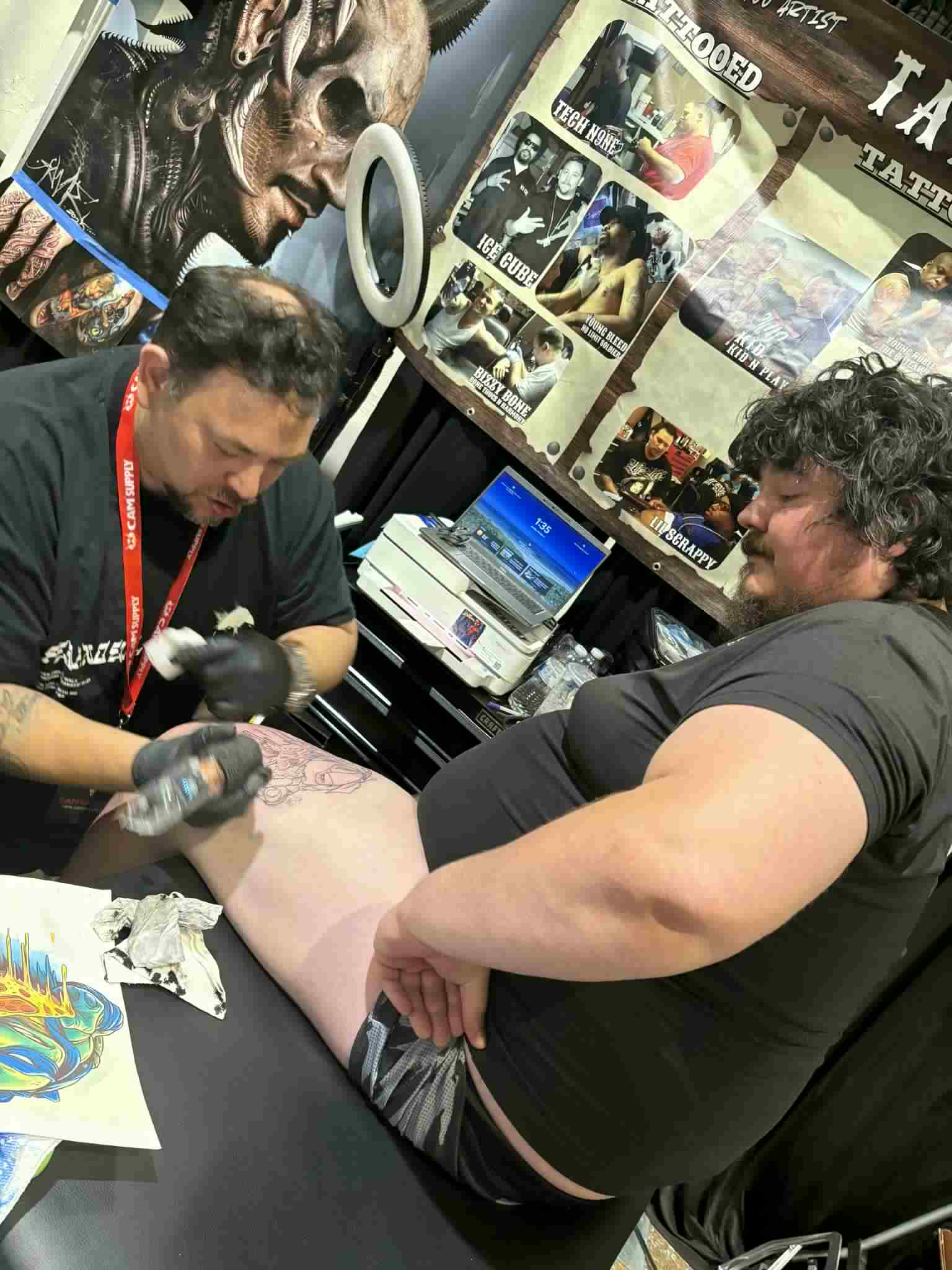
A full sleeve typically takes anywhere from 15 to 25 hours of tattoo time, sometimes more depending on the complexity of your design. That's not happening in one sitting. Most sleeves are completed over multiple sessions, spaced several weeks apart to allow for proper healing.
Here's what to expect:
Budget for quality: Experienced artists charge what they're worth. Cutting corners on price often means cutting corners on quality: and you'll be wearing this forever.
Plan for multiple sessions: A full sleeve might take 4-8 sessions or more, depending on detail and your pain tolerance.
Factor in touch-ups: Some areas may need minor touch-ups after healing, which is completely normal.
Consider deposits: Most shops require a deposit to book your appointment and begin custom design work.
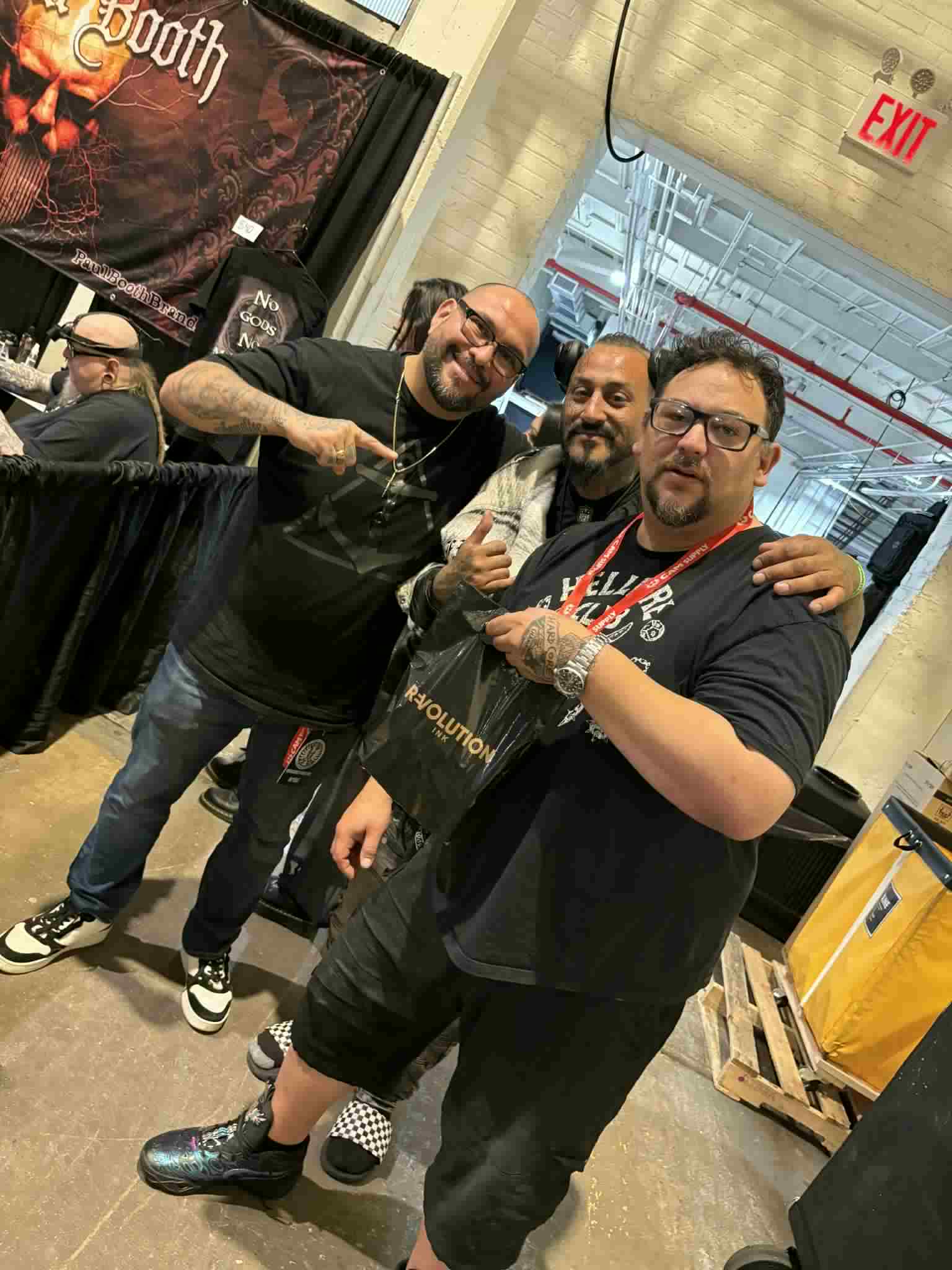
At Farnam Street Tattoo, we use Nikko Hurtado's Revolution Ink for all our work. It's industry-leading ink that heals beautifully and holds its vibrancy for years. Quality materials matter just as much as skill when it comes to a tattoo that stands the test of time.
Step 5: Schedule a Consultation with Your Artist
This is where everything comes together. A proper consultation is the most important step in planning your sleeve, and it's something you shouldn't skip.
During your consultation, you'll:
Share your vision: Bring your reference images, explain your theme, and talk about what this sleeve means to you.
Get professional input: Your artist will offer suggestions on placement, flow, and how to make your ideas work with your arm's natural shape.
Discuss the timeline: You'll map out how many sessions you'll need and how to schedule them.
Review the design process: For custom work, your artist will create original artwork based on your consultation. This takes time and expertise.
Ask questions: This is your chance to address any concerns about pain, healing, aftercare, or anything else on your mind.
A good consultation builds trust between you and your artist. You're going to spend a lot of time together over the coming months, so it's important that you feel comfortable and confident in their abilities.
Why Patience Is Your Best Friend
We get it: once you've decided you want a sleeve, you want it now. But the clients who end up with the best sleeves are the ones who take their time.
Rushing leads to:
Design elements that don't flow together
Placement that doesn't complement your body
Settling for an artist who's available instead of the right fit
Regret that's expensive to fix
Taking your time leads to:
A cohesive, intentional design that tells your story
Artwork that flows naturally with your arm's shape
A relationship with an artist who understands your vision
A sleeve you'll be proud of for decades
Ready to Start Planning Your Sleeve?
Your first tattoo sleeve is a journey, not a destination. It's a collaboration between you and your artist that unfolds over time, session by session, until you have a piece of wearable art that's uniquely yours.
At Farnam Street Tattoo, we specialize in custom tattoo work and large-scale pieces like sleeves. Our artists bring years of experience, award-winning skill, and a commitment to using only the best materials: including Nikko Hurtado's Revolution Ink.
If you're in Omaha and ready to start planning your sleeve, we'd love to sit down with you for a consultation. Check out our portfolio to see examples of our work, and when you're ready, reach out to book your appointment.
Your dream sleeve is waiting. Let's make it happen( the right way.)
Comments